Why Am I Tired But Can’t Sleep?
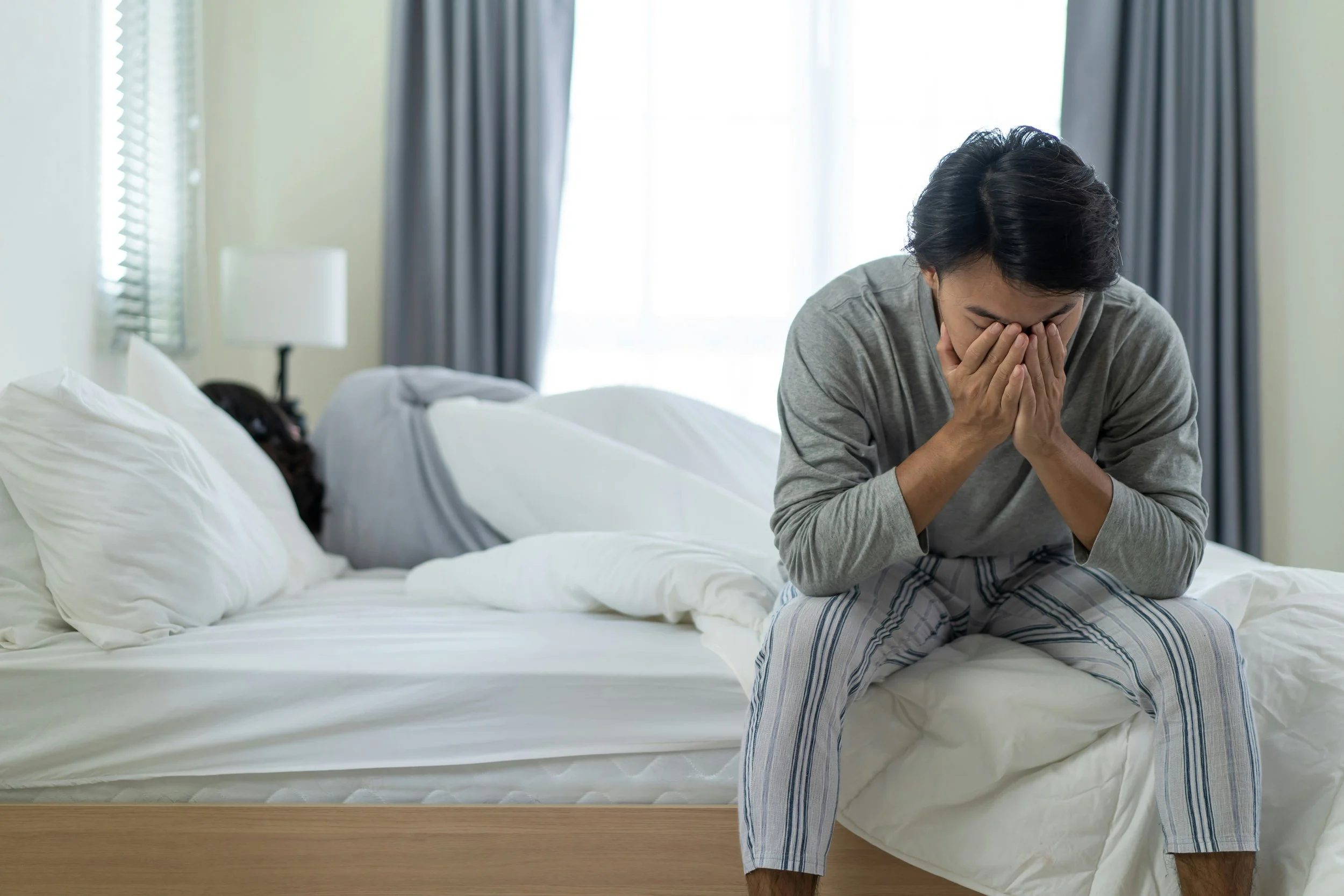
If you've ever climbed into bed feeling completely exhausted, only to find yourself staring at the ceiling wide awake, you're not alone.
Many people assume that if they're tired enough, sleep should come naturally. But sleep doesn't work like an on/off switch. In fact, one of the most frustrating experiences for people struggling with insomnia is feeling physically tired while being unable to fall asleep or stay asleep.
So what's going on?
Tired and Sleepy Are Not Always the Same Thing
When people say they're "tired," they may be describing a few different things:
Physical fatigue
Mental exhaustion
Emotional burnout
Sleepiness
While these experiences can overlap, they aren't exactly the same.
You can feel drained after a stressful day, emotionally depleted from caregiving, or mentally exhausted from constant decision-making and still have a nervous system that is too activated for sleep.
The Role of Hyperarousal
One of the most common drivers of chronic insomnia is something called hyperarousal.
Hyperarousal occurs when the brain and body remain on high alert, even when you're trying to rest. This can happen because of stress, anxiety, major life transitions, health concerns, relationship difficulties, or simply weeks or months of struggling with sleep.
Signs of hyperarousal may include:
Racing thoughts at bedtime
Difficulty "shutting off" your mind
Feeling alert when your head hits the pillow
Waking during the night and being unable to return to sleep
Feeling exhausted during the day but wired at night
When your nervous system perceives a threat, whether it's a stressful life event or worries about not sleeping, it prioritizes vigilance over sleep.
When Worry About Sleep Becomes Part of the Problem
Many people initially experience a period of poor sleep because of stress, travel, illness, or another life event.
Over time, however, they begin to worry about sleep itself.
Thoughts such as:
"What if I can't fall asleep tonight?"
"I'll never function tomorrow."
"I need to get at least eight hours."
can increase anxiety and pressure around sleep.
Ironically, the harder we try to force sleep, the more elusive it often becomes.
This is one reason why sleep anxiety can become a major factor in chronic insomnia.
Your Body May Be Sending Mixed Signals
Sleep is regulated by two primary biological systems:
Your Sleep Drive
Sleep drive builds the longer you stay awake, creating pressure for sleep.
Your Circadian Rhythm
Your circadian rhythm is your body's internal clock, helping determine when you naturally feel alert and when you feel sleepy.
When these systems become disrupted by inconsistent schedules, sleeping in, napping, or spending too much time in bed awake, you may feel tired but not naturally sleepy when bedtime arrives.
The Good News
If you find yourself constantly thinking, "I'm exhausted, so why can't I sleep?" there is likely a reason.
Chronic insomnia is rarely caused by a lack of effort. More often, it is maintained by a combination of hyperarousal, sleep anxiety, unhelpful sleep habits, and disruptions to your body's natural sleep systems.
The encouraging news is that these patterns can be addressed.
How CBT-I Can Help
Cognitive Behavioral Therapy for Insomnia (CBT-I) is considered the gold-standard treatment for chronic insomnia. Rather than simply helping people feel more relaxed, CBT-I addresses the factors that keep insomnia going.
Treatment may include:
Rebuilding healthy sleep pressure
Strengthening your body's natural sleep rhythm
Reducing sleep-related anxiety
Changing unhelpful beliefs about sleep
Creating a healthier relationship with bedtime
Over time, many people find they can stop fighting for sleep and begin trusting their body's natural ability to sleep again.
Ready to Get Better Sleep?
If you're feeling exhausted but unable to sleep, you don't have to figure it out alone.
I offer CBT-I sleep therapy in Newport Beach and telehealth throughout California. Together, we can identify what's keeping insomnia going and create a plan to help you sleep with greater confidence and consistency.
Schedule a free consultation today to learn whether CBT-I may be right for you.

Hi, I’m Jen!
Would you like to work together? Contact me to set up a free phone consultation. I look forward to connecting with you. 💛