

Sleep Anxiety Treatment in Newport Beach
When the Fear of Not Sleeping Becomes the Problem
You’re exhausted. You want to sleep. You know you need sleep. And yet, as bedtime approaches, your mind starts to race.
What if I can't fall asleep tonight?
What if I wake up at 3 a.m. and can’t go back to sleep?
What if I can’t function tomorrow because I couldn’t sleep?
The harder you try to sleep, the more alert and anxious you become.
If this sounds familiar, you may be experiencing sleep anxiety.
I provide sleep anxiety treatment in Newport Beach using Cognitive Behavioral Therapy for Insomnia (CBT-I), the gold-standard, evidence-based treatment for chronic insomnia and sleep-related anxiety.

What is Sleep Anxiety?
Sleep anxiety is the fear, worry, or pressure surrounding sleep.
For some people, it looks like lying awake wondering whether they'll be able to fall asleep. For others, it's the type of anxiety that shows up in the middle of the night, when worries about work, relationships, health, or life feel bigger, heavier, and more overwhelming than they do during the day.
Many people assume they have an anxiety problem that causes poor sleep. Then after experiencing several nights of difficult sleep, people begin to worry about sleep itself.
Over time, bedtime becomes associated with:
Worrying about whether you'll sleep
Monitoring your body for signs of tiredness
Watching the clock
Calculating how many hours remain until morning
Fear of how you'll feel the next day
Trying harder and harder to make sleep happen
Unfortunately, this creates the perfect conditions for insomnia.
Sleep is a natural process that happens when the mind and body feel safe enough to let go. Anxiety signals the brain to stay alert, vigilant, and prepared for potential threats, making restful sleep much more difficult.
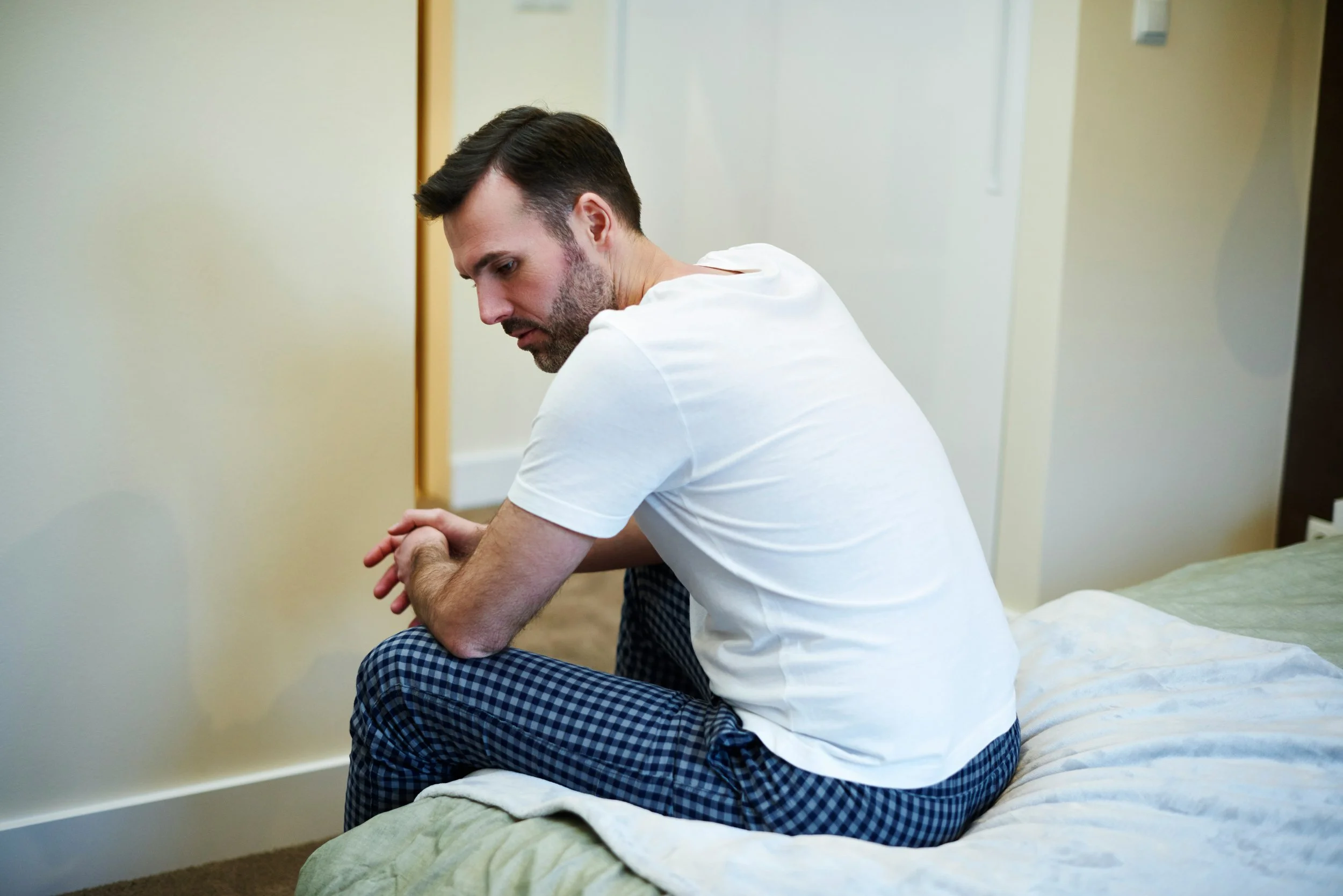
Common Signs of Sleep Anxiety
You may be struggling with sleep anxiety if you:
Feel nervous as bedtime approaches
Dread another bad night of sleep
Lie awake worrying about whether you'll fall asleep
Can’t quiet your racing mind
Frequently check the time during the night
Calculate how many hours are left before morning
Spend hours researching sleep solutions online
Feel preoccupied with sleep throughout the day
Cancel activities because you're worried about being tired
Feel frustrated, discouraged, or hopeless about your sleep
Many people describe feeling trapped in a cycle where the fear of not sleeping becomes more disruptive than the sleep problem itself. The good news is that this cycle can be broken.
The Sleep Anxiety Cycle
Sleep anxiety often follows a predictable pattern:
A few nights of poor sleep → increased worry about sleep → trying harder to sleep → increased alertness and frustration → more sleep difficulty → even more worry.
Over time, the brain begins to associate bedtime, the bedroom, or nighttime awakenings with stress instead of sleep.
This cycle is not a sign that something is wrong with you.
It is a learned pattern, and learned patterns can be changed.
How CBT-I Helps Treat Sleep Anxiety
CBT-I addresses the underlying thoughts, behaviors, and physical patterns that keep insomnia going.
Rather than simply helping you get more sleep, CBT-I helps you rebuild trust in your body's natural ability to sleep.
Treatment may include:
→ Reducing Sleep-Related Anxiety
Learning how fear, worry, and hyper vigilance contribute to insomnia and how to respond differently when anxiety and worry shows up.
→ Changing negative Sleep Thoughts
Identifying thoughts such as:
"What if I can't fall asleep tonight?
I can already tell tonight is going to be bad.
Why am I still awake?
If I don't fall asleep soon, tomorrow will be ruined.
I need to fall asleep right now.
I'll never be able to function tomorrow.
I'm going to feel terrible all day.
What if I wake up at 3 a.m. again?
I only have 5 hours left to sleep.
If I don't sleep well tonight, I'll get sick.
I need to try harder to fall asleep.
I used to sleep fine. What's wrong with me now?
I have to get good sleep tonight.
If I don't sleep, tomorrow is going to be a disaster.
and replacing them with more accurate, supportive perspectives.

→ Improving Sleep Schedule
Creating a sleep schedule that strengthens your body's natural sleep drive and circadian rhythm.
→ Breaking Unhelpful Sleep Habits
Addressing behaviors such as clock-watching, spending excessive time in bed awake, sleeping in, napping, or other strategies that may unintentionally keep insomnia going.
→Rebuilding Confidence
Helping you move from fear and frustration toward confidence and flexibility around sleep.
A Personalized Approach to Sleep Anxiety Treatment
While CBT-I provides a structured and highly effective framework, my approach goes beyond a one-size-fits-all protocol.
As a therapist, I also help clients explore the stress, anxiety, perfectionism, life transitions, and emotional factors that may be contributing to their sleep difficulties.
Together, we create a treatment plan that is evidence-based, practical, and tailored to your unique situation.
Serving Clients Throughout Orange County and California
My office is located in Newport Beach, and I work with adults throughout Orange County who are struggling with chronic insomnia, sleep anxiety, nighttime overthinking, difficulty falling asleep, frequent nighttime awakenings, and early morning waking.
Clients often come from Costa Mesa, Irvine, Huntington Beach, Laguna Beach, Newport Coast, and surrounding communities. I also offer telehealth throughout California.

Frequently Asked Questions about Sleep Anxiety and CBT-I:
-
Sometimes sleep anxiety improves when a stressful period passes. However, when anxiety becomes linked specifically to sleep, the pattern often continues even after the original stressor is gone. CBT-I helps break that cycle.
-
Not exactly. Insomnia refers to difficulty falling asleep, staying asleep, or waking too early. Sleep anxiety is often one of the factors that helps maintain insomnia over time.
-
Yes. CBT-I has been shown to be effective for both recent and long-standing insomnia. Many people seek treatment after years of struggling with sleep.
-
Many people use CBT-I while working with their physician on questions related to sleep medication. Any medication changes should be discussed with your prescribing provider.
-
CBT-I can help with many forms of insomnia, including difficulty falling asleep, waking during the night and struggling to fall back asleep, waking too early, and sleep anxiety. It is also helpful for people whose sleep difficulties are connected to stress, burnout, or life transitions.Most clients complete CBT-I in approximately 6 to 10 sessions, though treatment length varies based on individual needs and goals.
-
If you're tired of dreading bedtime, constantly worrying about sleep, or feeling trapped in the cycle of insomnia and sleep anxiety, help is available.
I offer a free consultation to discuss your sleep concerns and determine whether CBT-I may be a good fit for you.
In-person in Newport Beach • Telehealth throughout California.
Read More on the Blog:
Sleep Anxiety vs. Insomnia: What's Really Going On (and How CBT-I Can Help)